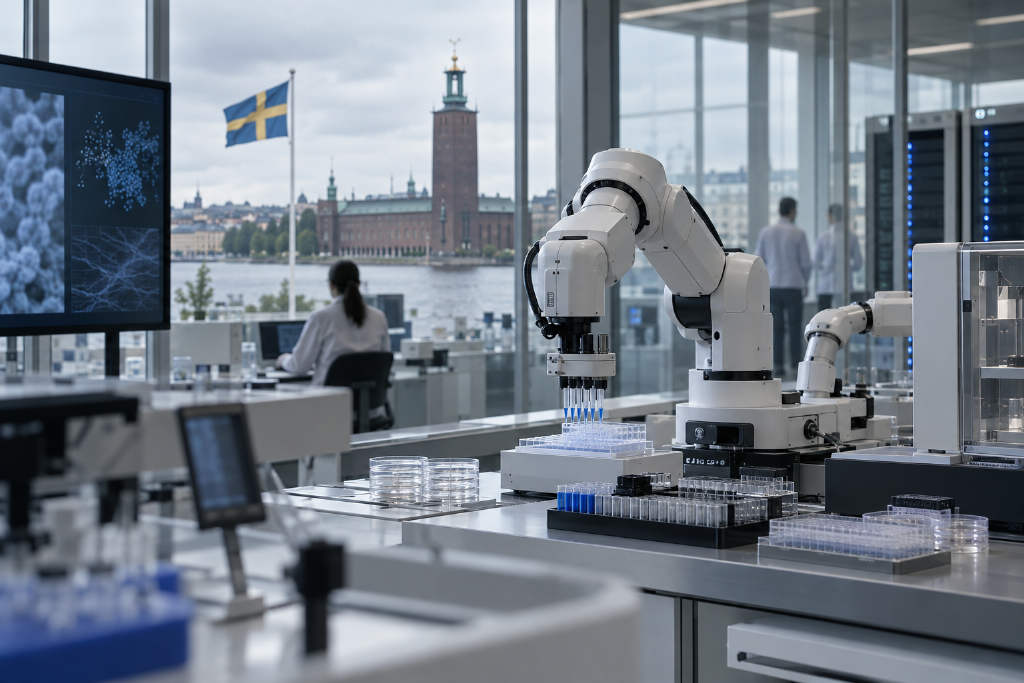
Sweden2026-10-02 05:24:32Swedish Researchers Build an AI Scientist That Can Run Experiments AutonomouslySwedish researchers have developed an AI scientist designed to run experiments on its own, according to a Techub News brief citing Crypto Briefing. The system is intended to speed up scientific discovery by automating parts of the research process. The reported goal is to improve efficiency while also surfacing insights that may otherwise be overlooked. No additional technical details, timeline, or institutional affiliations were disclosed in the brief. The report focused on the system’s stated purpose: conducting experiments autonomously and supporting faster, more efficient research outcomes.60
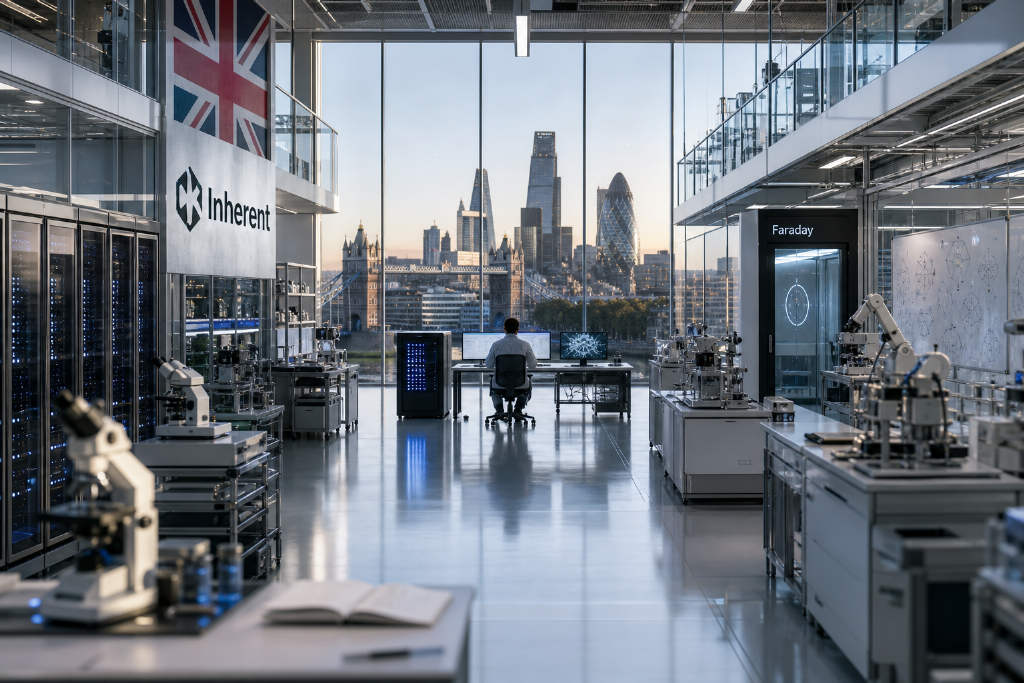
Inherent2026-08-23 02:52:14Inherent unveils Faraday, an AI scientist agent built on a 27B Qwen modelInherent, a London-based AI startup founded by several former Google DeepMind researchers, has introduced Faraday, a research agent designed to independently reproduce results from scientific papers. The company says Faraday outperformed OpenAI GPT-5.5 and Anthropic Claude Opus 4.8 in its Replica benchmark, even though the system is built on a much smaller 27-billion-parameter Qwen 3.6 model. Replica starts with 310 tasks drawn from 100 machine learning and AI for Science papers across fields including natural language processing, materials science, and weather forecasting. Instead of answering paper-related questions, the agent must recreate research figures under limited time and compute, without access to the original charts. Inherent says its larger aim is to train an AI Scientist, not just a tool for literature search. That includes teaching what the company calls “research taste” — deciding which questions matter, which experiments are worth running, and how to allocate limited resources. To pursue that, Inherent uses long-horizon reinforcement learning and human validation of its evaluation process. The startup recently emerged from stealth with a $50 million seed round and plans to expand its team to around 20 to 25 people by year-end, with world models also on its roadmap.1130
USTC2026-08-06 08:25:09USTC study tests whether AI can run a real chemistry labA new University of Science and Technology of China study pushed AI agents beyond text-based planning and into a real machine-catalysis lab. The setup includes 45 modular automated workstations covering synthesis, characterization, and catalytic testing, wrapped as machine-readable skills that agents can call under real equipment constraints. Researchers evaluated 48 configurations across six agent frameworks and nine large language models, running 4,608 trials on 32 expert-defined research tasks. Only 151 workflows, or 3.3%, could execute without manual repair. The best result came from Claude Code with Claude Opus 4.7, at 28.1%, followed by Codex with GPT 5.5 at 19.8%. In a five-round closed loop, Codex/GPT 5.5 could adjust formulations and operating conditions, but it did not redesign analysis methods or fix persistent omissions such as missing electrode binders and assay-specific color reagents. The paper separates three different abilities often lumped together in the “AI scientist” debate: writing an experimental plan, producing a workflow that can actually run in a physical lab, and changing the broader research strategy after seeing experimental results.1900